

Methodology: Allow Air to Open Space (A Practice of Porosity, Il.lacions Gallery)
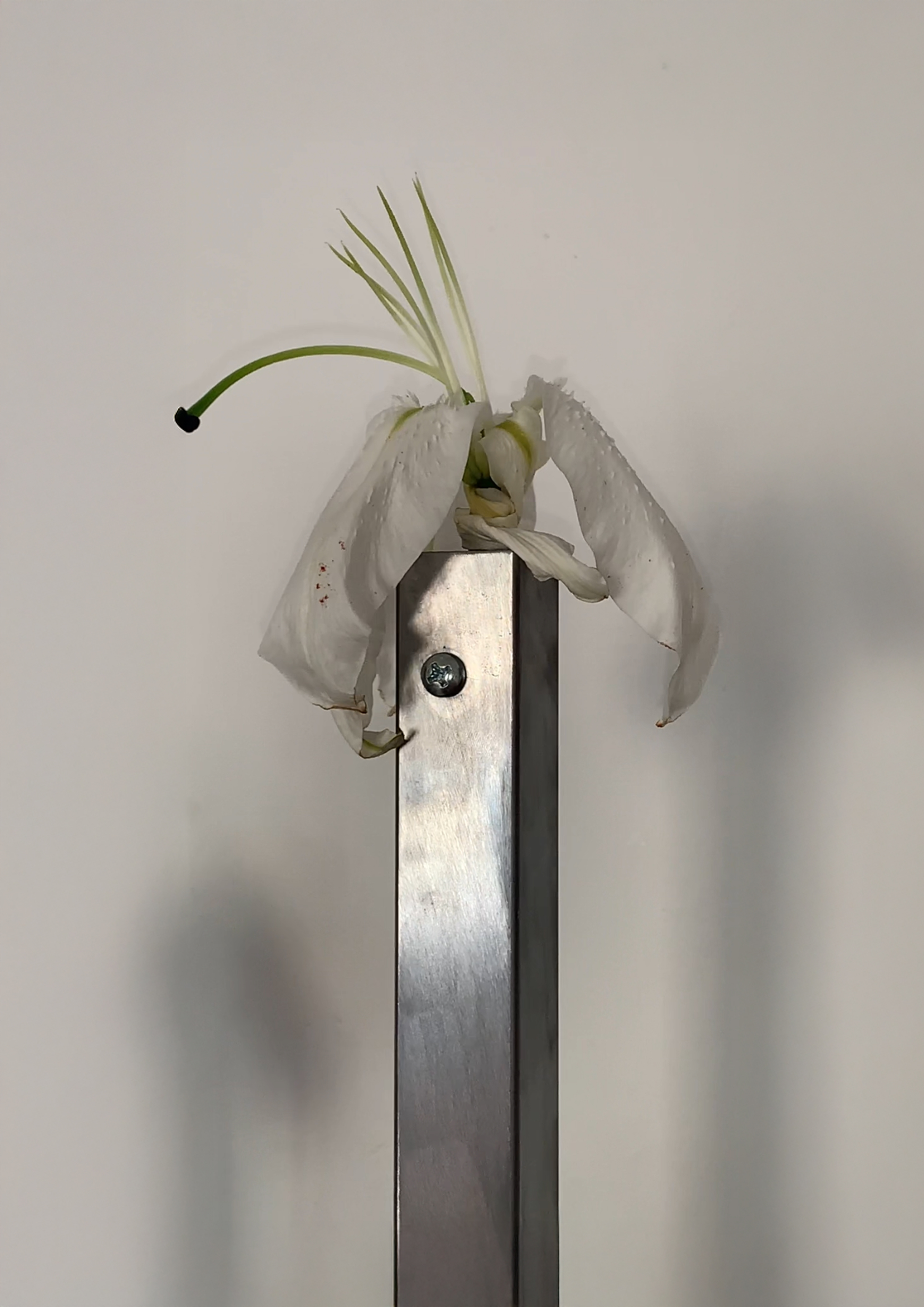
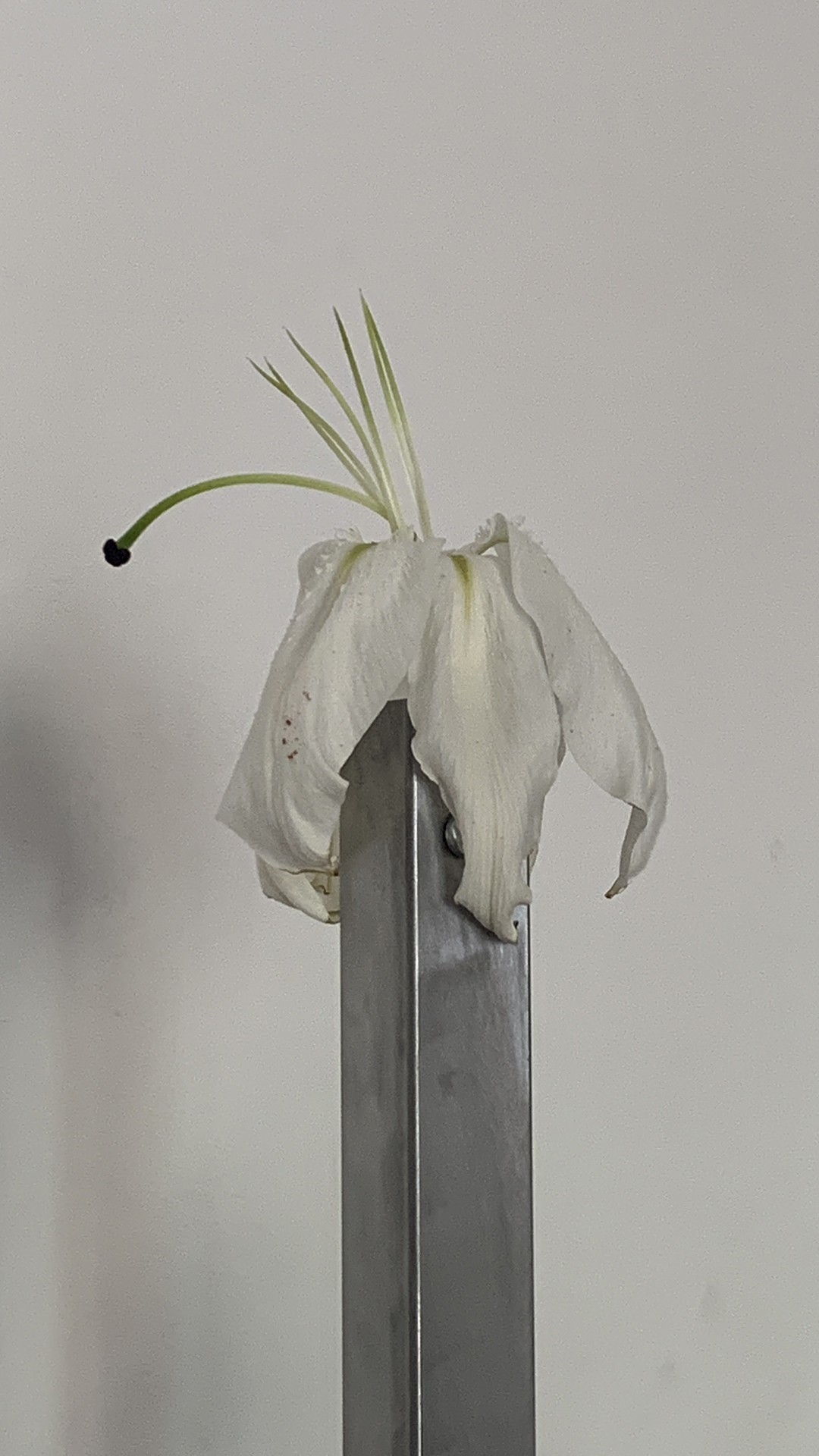
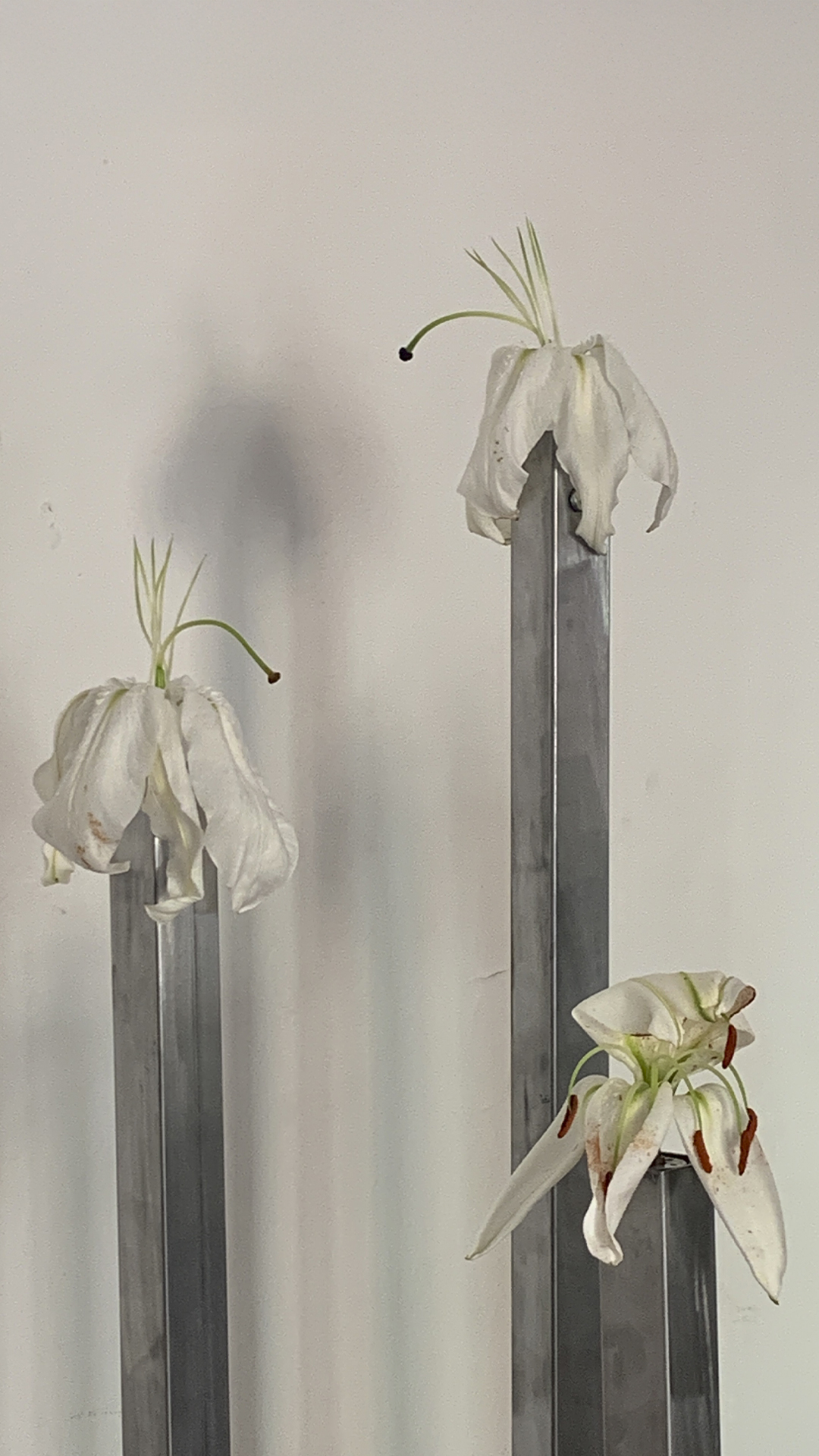
A Practice of Porosity is a living research project that holds space for what is left behind.
There is a gentleness in decay, an intelligence that inhabits things as they open towards their own undoing.
2025: Turbina Festival, Mira Festival, Barcelona, ES.
2025: Solo Exhibition, at Il.lacions Gallery, Barcelona, ES.
2025: Further explored at “Spring Ceremonies” comissioned by Nike Women, Barcelona, ES.
2024: This installation emerged through an initial prototype exhibited at Rizoma Festival, La Cellera de Ter, ES.
The initial installation from which this investigation emerged, was from a series of 12 motorized iron sculptures, holding flowers from bud to dry in rotation.
2025: Turbina Festival, Mira Festival, Barcelona, ES.
2025: Solo Exhibition, at Il.lacions Gallery, Barcelona, ES.
2025: Further explored at “Spring Ceremonies” comissioned by Nike Women, Barcelona, ES.
2024: This installation emerged through an initial prototype exhibited at Rizoma Festival, La Cellera de Ter, ES.
The initial installation from which this investigation emerged, was from a series of 12 motorized iron sculptures, holding flowers from bud to dry in rotation.
Through the process of decomposition, emerged dialogues of reconfiguring language, memory, and artistic practice through porous, more-than-human alliances.
A gesture to revisit: what is kept, what is archived, what is buried.
The intimacy of capturing the subtle nuances of my research, las sutilezas del mismo proceso o metodología.
Language, like organic matter, erodes over time, a fertile ground for new thought configurations. In nature, waste does not existe, let the words fragment, rot, and feed what has not yet germinated.
A gesture to revisit: what is kept, what is archived, what is buried.
The intimacy of capturing the subtle nuances of my research, las sutilezas del mismo proceso o metodología.
Language, like organic matter, erodes over time, a fertile ground for new thought configurations. In nature, waste does not existe, let the words fragment, rot, and feed what has not yet germinated.
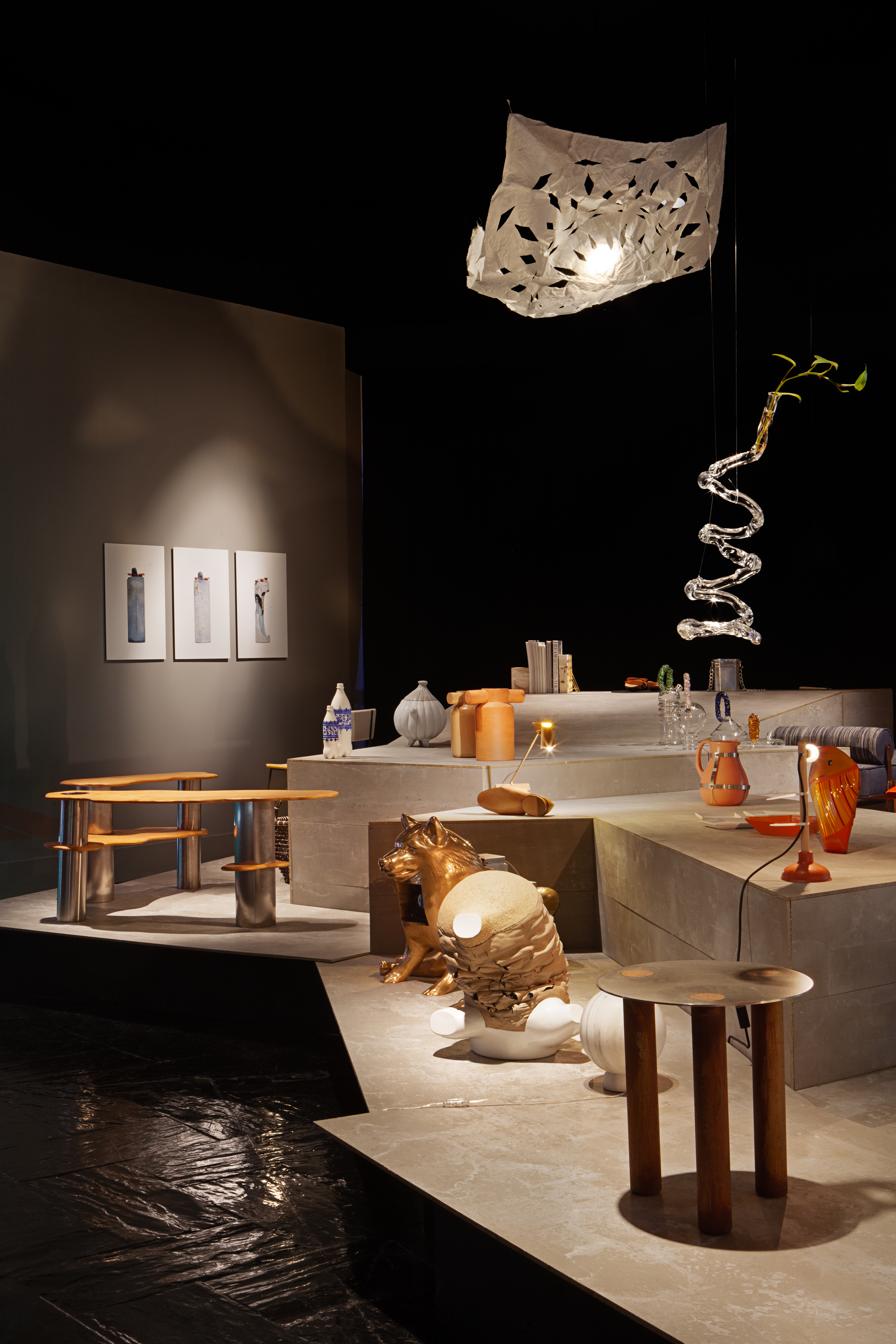
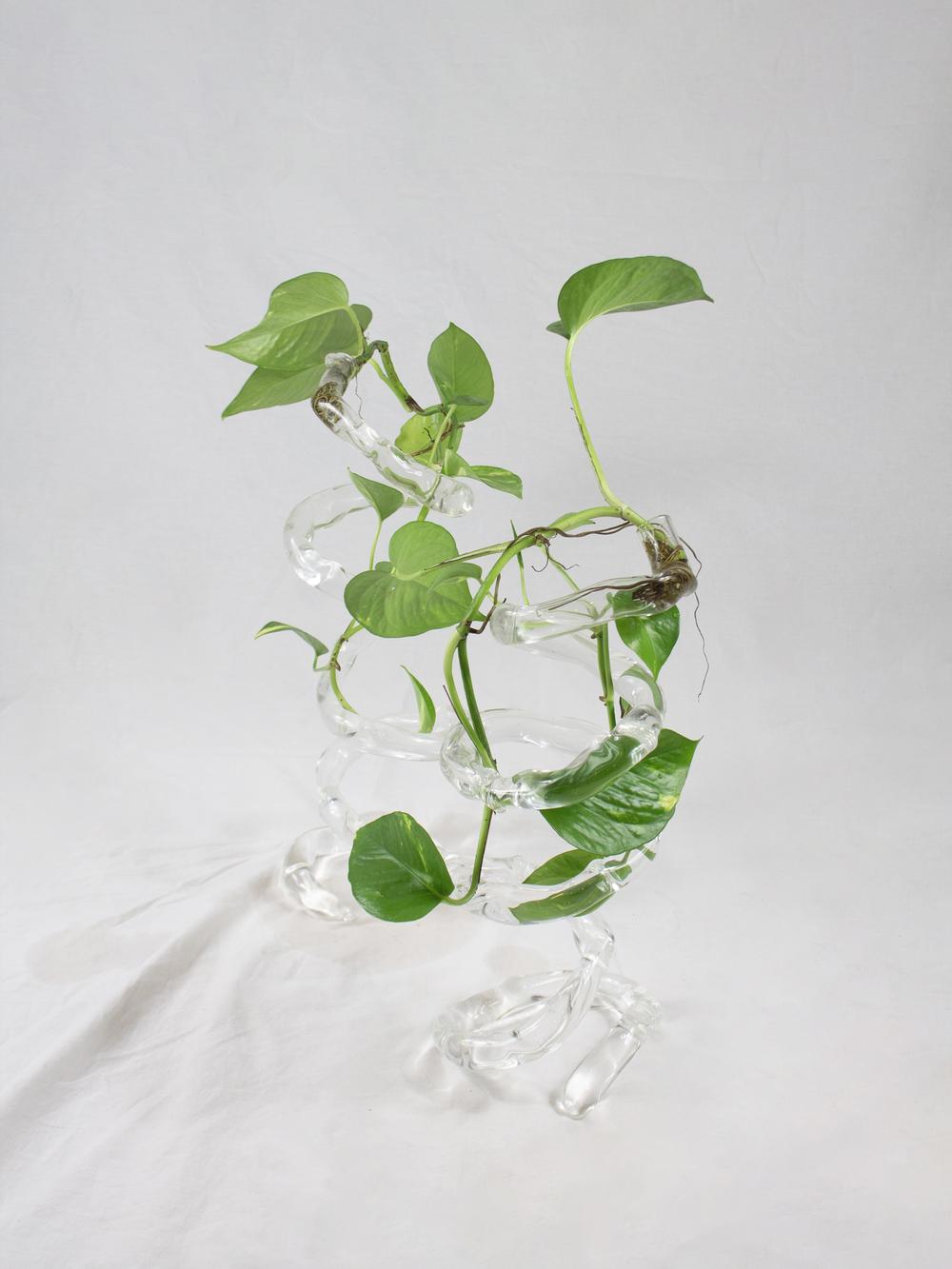


Espiral ( 2021 )
Espiral is a sculpture designed in 2021 as part of the interactive installation created for Paisaje Sonoro, a performative series that generates a live soundscape through the biodata visualization system connected to the plants inhabiting the installation.
Espiral can be purchased vía my shop.
Locations:
2022 “Paisaje II”, Mira Festival
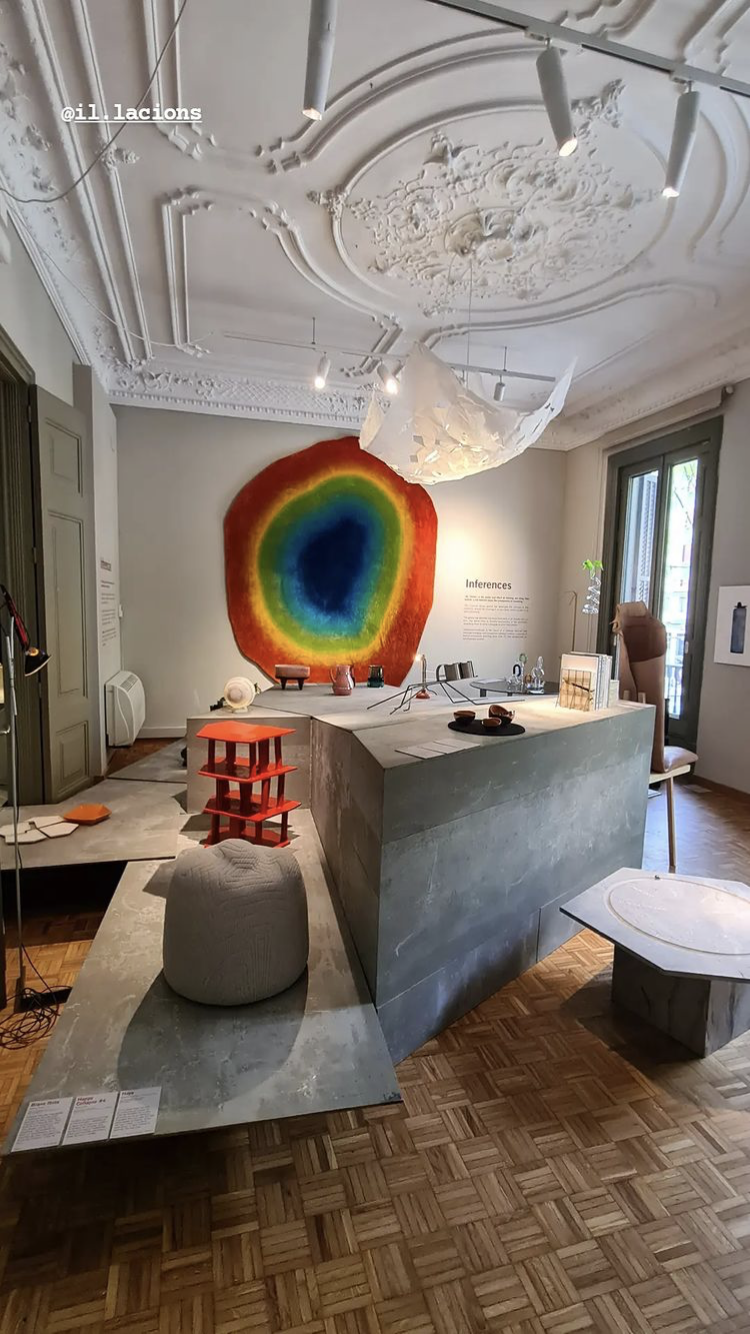
2022: Madrid Design Festival 2022, “Inteferences” Il.lacions, Madrid, ES.
2022: 50a Premios de Artes Visuales, Subte, Montevideo, UY.
2022: MMMad x Las Cigarreras x Todo Bien 2021 “Paisaje Sonoro #6” Akyute, Alicante, ES.
2021: Neo Festival x Cosmo Caixa 2021 “Paisaje Sonoro #5” Akyute, Barcelona, ES.
2022: Bocca di Bonifacio, Barcelona, ES
Espiral can be purchased vía my shop.
Locations:
2022 “Paisaje II”, Mira Festival
2022: Madrid Design Festival 2022, “Inteferences” Il.lacions, Madrid, ES.
2022: 50a Premios de Artes Visuales, Subte, Montevideo, UY.
2022: MMMad x Las Cigarreras x Todo Bien 2021 “Paisaje Sonoro #6” Akyute, Alicante, ES.
2021: Neo Festival x Cosmo Caixa 2021 “Paisaje Sonoro #5” Akyute, Barcelona, ES.
2022: Bocca di Bonifacio, Barcelona, ES
The piece is designed to guide the growth of the stem and roots of the plant, becomming in constant transition and dialogue with its environment. The plants movement becomes part of the sculpture, evolving over time. It is the result of a previous investigation regarding plant-intelligence alongside Akyute.


The Softest Hard,
(A Practice of Porosity, Hangar)
Methodology: Allow proximity to rearrange matter
Methodology: Allow proximity to rearrange matter
A Practice of Porosity is a living research project that holds space for what is left behind.
There is a gentleness in decay, an intelligence that inhabits things as they open towards their own undoing.
2026: Residency Hangar Barcelona, ES
2026: Art Nou, Tandem x Casa RARO, Barcelona, ES
The Softest Hard presents a series of objects that accumulate gestures of failure and fragility during my residency at Hangar, Barcelona. It questions the political community that invests more energy in reinforcing borders than in expanding rights.
Materially, the pieces are constructed from blown glass and the reconstruction of found objects, with multispecies collaborations and low-tech languages. Through alliances with people, materials, and tools in contexts of proximity, I have allowed remnants and relationships to ferment and reorganize into new forms of intimacy.
As part of this research, I commuted the same route every day for three months, observing the places where waste accumulates and documenting both the materials that circulate and those that remain. By placing my attention on materials that, despite being discarded or deemed undesirable, I noticed their permanence within the city.
2026: Residency Hangar Barcelona, ES
2026: Art Nou, Tandem x Casa RARO, Barcelona, ES
The Softest Hard presents a series of objects that accumulate gestures of failure and fragility during my residency at Hangar, Barcelona. It questions the political community that invests more energy in reinforcing borders than in expanding rights.
Materially, the pieces are constructed from blown glass and the reconstruction of found objects, with multispecies collaborations and low-tech languages. Through alliances with people, materials, and tools in contexts of proximity, I have allowed remnants and relationships to ferment and reorganize into new forms of intimacy.
As part of this research, I commuted the same route every day for three months, observing the places where waste accumulates and documenting both the materials that circulate and those that remain. By placing my attention on materials that, despite being discarded or deemed undesirable, I noticed their permanence within the city.
What began as a poetic gesture within my practice gradually revealed broader logics of extraction, excess, and disposal, as well as recycling systems sustained by marginalized and invisible bodies and forms of labor. At €0.20 per kilogram of iron and €1 per kilogram of aluminum, the prices expose circuits of exploitation and displaced ecological violence.
During this period, I shared a staircase with a space occupied by recyclers, who dismantle found objects daily under precarious conditions. The proximity between their gestures and my own practice generated a productive tension around the material conditions and privileges from which my work operates. Over time, this tension evolved into forms of exchange and reciprocity through the circulation of tools, materials, and care. Some of the recyclers began setting aside fragments for me, while I gathered leftover materials from my walks and from other Hangar residents to contribute to their recycling processes. These relationships became an active part of my methodology of porosity, cultivating more situated and attentive ways of making. The sculptures that emerged embody tangled, often invisible anatomies, assembled from the materials accumulated through these exchanges.
This research unfolds within a broader political context in which the European Parliament has definitively approved the “Return Regulation,” a migration framework that undermines fundamental human rights. The Softest Hard turns attention toward those who sustain the metabolism of a system that simultaneously excludes them, opening a dialogue about the future of bodies and forms of labor that have already been rendered invisible, while questioning political communities that, rather than expanding rights, reinforce borders.
During this period, I shared a staircase with a space occupied by recyclers, who dismantle found objects daily under precarious conditions. The proximity between their gestures and my own practice generated a productive tension around the material conditions and privileges from which my work operates. Over time, this tension evolved into forms of exchange and reciprocity through the circulation of tools, materials, and care. Some of the recyclers began setting aside fragments for me, while I gathered leftover materials from my walks and from other Hangar residents to contribute to their recycling processes. These relationships became an active part of my methodology of porosity, cultivating more situated and attentive ways of making. The sculptures that emerged embody tangled, often invisible anatomies, assembled from the materials accumulated through these exchanges.
This research unfolds within a broader political context in which the European Parliament has definitively approved the “Return Regulation,” a migration framework that undermines fundamental human rights. The Softest Hard turns attention toward those who sustain the metabolism of a system that simultaneously excludes them, opening a dialogue about the future of bodies and forms of labor that have already been rendered invisible, while questioning political communities that, rather than expanding rights, reinforce borders.


Methodology:
Follow the same route every day, observe the places where waste accumulates, observe what remains, what circulates.
( A Practice of Porosity, Hangar)
( A Practice of Porosity, Hangar)
A Practice of Porosity is a living research project that holds space for what is left behind.
There is a gentleness in decay, an intelligence that inhabits things as they open towards their own undoing.
2026: Residency Hangar Barcelona, ES
2026: Maker Sherpa, Convent de Sant Augustí, Barcelona, ES
2026: Residency Hangar Barcelona, ES
2026: Maker Sherpa, Convent de Sant Augustí, Barcelona, ES
This series of sculptural objects emerges from a daily practice of walking, collecting, and attending to what persists. During my residency at Hangar, I followed the same route each day, gathering discarded materials encountered along the commute. An exercise in seeing what is left behind, too broken, too useless or too little economic value that become permanent. Through repetition, the act of collecting became a method for observing patterns of circulation, abandonment, and permanence within the urban landscape.


Not All Flowers Follow The Sun (2026)
An installation and investigation in process that presents a series of motorized, decomposing sunflower-heads out of step with the sun.
2026: Production Grant, Casa RARO, Barcelona, ES
2026: Convent de Sant Augustí, Barcelona, ES
Not All Flowers Follow the Sun investigates the multifaceted nature of the sunflower, an organism classified as a weed and integrated into systems of cultivation and domestication.
An installation and investigation in process that presents a series of motorized, decomposing sunflower-heads out of step with the sun.
2026: Production Grant, Casa RARO, Barcelona, ES
2026: Convent de Sant Augustí, Barcelona, ES
Not All Flowers Follow the Sun investigates the multifaceted nature of the sunflower, an organism classified as a weed and integrated into systems of cultivation and domestication.
In these processes the plant is appropriated as a biological technology mobilized to remediate damage it did not cause, harnessing contaminants that accumulate and redistribute across bodies and territories. Thus, waste lands produce waste bodies: repair sustained by vulnerable bodies. In my meadow the flowers neither follow the sun nor to the programmed code; motorized and in decay, they move out of phase.
This piece extends her methodological research A Practice of Porosity, exploring ways to inhabit decomposition in order to sustain sensitivity in contexts of accelerated change and deep erosion.
Read extended draft
This piece extends her methodological research A Practice of Porosity, exploring ways to inhabit decomposition in order to sustain sensitivity in contexts of accelerated change and deep erosion.
Read extended draft